Dog Paw Frame SVG: A Designer’s Real-World Embroidery Review
Let’s be honest—I opened Dog Paw Frame SVG Dog Paw Round Frame expecting something sweet, simple, and safe. What I found was more nuanced: a quietly confident design that works *because* it respects the limits of embroidery—not just cutting machines. As someone who’s stitched hundreds of custom pet-themed pieces for Etsy shops, boutique baby lines, and local craft fairs, I tested this frame on a linen-cotton tea towel, a midweight cotton sweatshirt, and a twill patch—each time asking: “Does this feel handmade? Does it hold up to real wear? And most importantly—would my customers pause, smile, and say, ‘I need that’?”
First Impression: Minimalist Charm, Not Cutesy Clutter
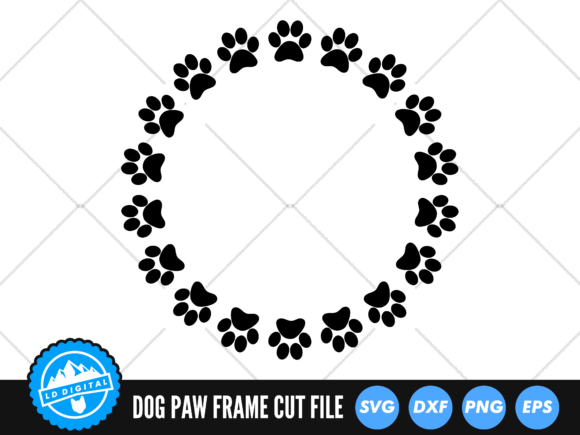
The Dog Paw Frame SVG Dog Paw Round Frame lands with gentle intention. It’s not a cartoon paw—it’s a clean, symmetrical round frame built from four subtle paw prints, spaced evenly like petals. No text, no hearts, no excessive detailing. That restraint is its strength. In embroidery, simplicity translates to stitch clarity, fewer thread breaks, and better readability at small scales. It reads as warm, inclusive, and quietly celebratory—perfect for pet lovers who prefer understated charm over loud novelty.
Where It Shines: Sweatshirts, Totes, and Thoughtful Gifting
I used it on a charcoal crewneck sweatshirt—hooped with medium tear-away stabilizer and stitched in matte polyester thread. The rounded shape framed the chest pocket beautifully, and the open negative space inside the circle kept the design breathable and lightweight. No puckering, no distortion. Same went for a natural canvas tote: the frame held crisp edges even across the slight weave texture, and because the paw motifs are well-spaced (not crammed), the fill stitches settled evenly without overloading any one zone.
For baby items—think organic cotton burp cloths or gauzy swaddle blankets—I resized it down to 3.2 inches. It remained legible, especially when paired with a soft satin stitch outline around each paw. That subtle definition makes all the difference on delicate fabrics where heavy fill can stiffen or shadow the material.
Where to Pause—and Plan Ahead
This isn’t a one-size-fits-all embroidery file. Its round symmetry works *against* you on curved surfaces like caps or beanies unless you’re using a cap frame and adjusting underlay carefully. On stretchy knits (like jersey tees), skip the dense fill areas and opt for a lighter stitch density—or better yet, convert key elements to running stitch outlines only.
Dark fabrics demand attention too. That inner circle? It’s open space—not a solid fill—so if you’re stitching on black, make sure your thread color has enough contrast to define the paw shapes. I tested it in charcoal gray thread on navy twill: elegant, but barely visible. Switching to cream brought it alive instantly.
Also worth noting: while the SVG format is ideal for cutting machines, embroidery requires conversion to an embroidery file (.dst, .pes, etc.). Don’t assume auto-digitizing will preserve the balance. Small corners between paw pads can collapse into mush without manual cleanup—especially in satin stitch zones. Always preview in your embroidery software before hooping.
What It Adds to Your Craft Business—Beyond Aesthetics
As an Etsy seller or small shop owner, you’re not just selling a design—you’re selling trust, consistency, and perceived value. The Dog Paw Frame SVG Dog Paw Round Frame supports that. Its balanced proportions scale cleanly from 2.5” patches to 6” pillow covers. That means one design asset powers multiple product lines: embroidered patches for dog-walking gear, subtle monogram-style accents on aprons, or even holiday-themed kitchen towels (“Paws & Presents” with a tiny bow added manually).
Customers notice craftsmanship—not just cuteness. When the stitch count stays moderate, thread tension holds, and stabilizer doesn’t show through, your finished product feels intentional. That builds repeat buyers. And because the motif is universally recognizable but not overused, it avoids trend fatigue—unlike some hyper-specific breed silhouettes that date quickly.
Practical Designer Notes Before You Stitch
- Always test first—on scrap fabric matching your final project’s weight and stretch.
- Check thread color contrast on both light and dark backgrounds before digitizing.
- Review stitch density—if your software shows >12,000 stitches for a 4” version, simplify fill areas or switch to tatami fill.
- Confirm hoop size compatibility—this design fits comfortably in a 4×4 hoop at standard scale, but resizing beyond 5” may require repositioning or multi-hooping.
- Inspect small details—especially where paw pads meet the frame edge. Tight curves need proper underlay and reduced jump stitch speed.
- Test black-and-white mockups—to ensure visual hierarchy holds without color crutches.
- Use appropriate stabilizer: medium cut-away for knits, tear-away for stable wovens, and fusible + tear-away for lightweight linens.
- Verify licensing—the listing says it’s usable for shirts, mugs, bags, and more, but confirm whether commercial resale of finished embroidered items is explicitly permitted before listing on Etsy or wholesale channels.
Final Thought: A Quiet Workhorse, Not a Flashy Gimmick
The Dog Paw Frame SVG Dog Paw Round Frame won’t shout—but it’ll linger. It’s the kind of design that feels right on a handmade kitchen towel gifted to a new dog parent, or stitched discreetly on the sleeve of a vet tech’s uniform. It belongs in your core library of Graphics for Crafts not because it’s trendy, but because it’s thoughtful, adaptable, and respectful of both machine and maker. In a world full of noisy, over-digitized pet motifs, this one breathes. And in embroidery—where every stitch carries weight—that’s everything.